
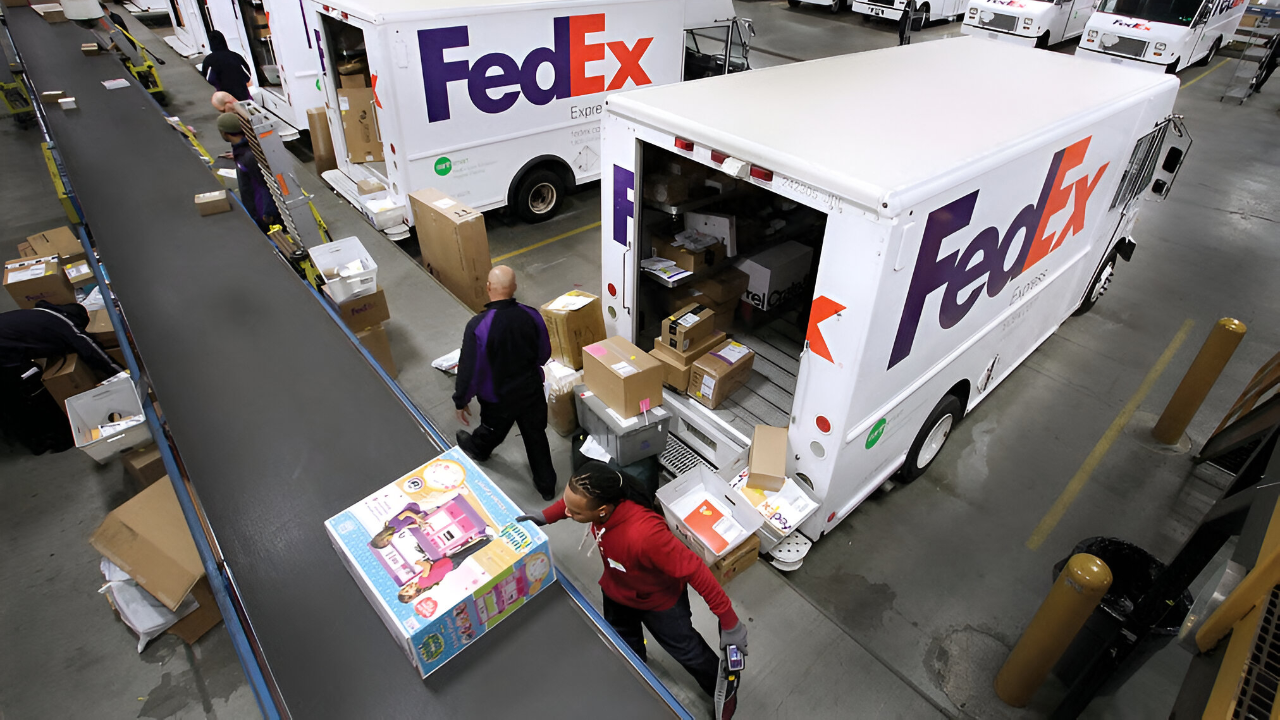
FedEx’s massive logistics hub in Coppell, Texas is shutting down, eliminating 856 jobs after its only customer abruptly shifted business to a competing provider. The closure exposes how dependent the facility was on a single client and how quickly an anchor tenant’s departure can unravel a regional employment pillar. It also unfolds against mounting competitive and financial pressures for FedEx, raising broader questions about vulnerability in the third‑party logistics sector and the resilience of local workers and families.
Single-Customer Vulnerability: When One Account Becomes Everything
Operations at the Coppell hub were built entirely around one unnamed customer, leaving no fallback once that account left. A WARN notice filed on November 21, 2025 by FedEx HR manager Joel Frierson confirmed that all 856 positions will be permanently eliminated, making the site economically unsustainable. The situation illustrates classic “anchor tenant” risk: when one client drives all revenue, a contract loss translates almost instantly into a full shutdown rather than a gradual scale‑back.
Work at the facility was performed by a fully non‑unionized workforce, meaning employees did not have seniority rights or collective bargaining leverage as the closure plan took shape. Annual pay for those workers ranged from roughly $70,000 to $100,000, putting an estimated $60 million to $85 million in payroll at stake. With many workers supporting spouses, children, or other dependents, local officials estimate that as many as 2,500 to 3,400 people could feel the ripple effects, from lost income to changes in health coverage and housing stability.
The Corporate Explanation: Customer Loss as Sole Trigger
FedEx has made clear it views the customer’s move as the sole immediate cause of Coppell’s demise. In its WARN documentation and public explanations, the company stresses that no internal consolidation, network optimization, or partial volume shift triggered the decision; the customer instead transferred its business in full to another third‑party logistics provider. The identity of that customer has not been disclosed, but the complete transition underscores how much power a single large client can wield over a specialized logistics hub. Behind that proximate cause, however, lie structural questions about how FedEx and its peers balance client concentration with operational security.
Broader Market Pressures: Competition and Market Share Erosion

The Coppell shutdown lands as FedEx absorbs other setbacks and retools its broader network. In 2024 the company lost its two‑decade USPS air cargo contract to UPS, creating an estimated $500 million earnings headwind for fiscal 2025. FedEx now controls about 33 percent of U.S. courier revenue but only 19 percent of parcel volume, while Amazon Logistics has grown its own package count from about 1.7 billion in 2019 to more than 6 billion in 2024. Those trends reflect a market where major shippers consolidate vendors and favor carriers offering integrated technology and flexible capacity, making individual facilities more exposed when a key customer reassesses its options.
Regionally, the Coppell news follows other FedEx cutbacks and adds to a broader employment squeeze across North Texas. The 856 roles lost there come on top of 305 positions eliminated earlier in Fort Worth, bringing FedEx’s Texas job reductions between June and November to 1,161. Other employers have also trimmed staff: Chevron has cut about 200 jobs, Lewisville ISD around 500, and nonprofit Child Care Associates roughly 300, collectively eroding the employment base that supports thousands of local households. In a corridor where warehousing, trucking, and fulfillment are major economic drivers, a single large facility going dark reshapes demand for everyone from janitorial vendors to transport contractors.
Local Economic Shock: Coppell’s Affluent Profile at Risk

For Coppell specifically, the shock is magnified by its relatively affluent profile and heavy reliance on high‑wage logistics work. The city’s median household income is about $130,000, and the FedEx hub alone generated an estimated $150 million to $300 million in annual revenue, supporting a network of service providers ranging from food operations to office suppliers. With one event removing roughly 3 to 4 percent of the local logistics workforce, reduced consumer spending and business‑to‑business activity are expected to pressure tax collections and small‑business stability. Local agencies gain some time to respond thanks to a staggered layoff schedule, but the cuts coincide with the holiday season, when financial strain can be most acute.
FedEx has organized the closure in four distinct stages under federal and state notice rules. The WARN filing went in on November 21, 2025, followed by an initial wave of 62 layoffs on January 16, 2026. The remaining 794 employees are scheduled to depart by April 29, 2026, with that date also marking the official facility closure. Throughout the process, FedEx says employees will continue to receive wages and benefits through their final day, a structure that stretches out uncertainty for workers but gives public and private workforce programs a clearer planning horizon.
In terms of worker protections, FedEx has pledged severance packages, continued group insurance and retirement benefits under existing plan rules, and relocation assistance for those willing and able to move to other company sites. Displaced employees are being provided information about nearby vacancies, and local authorities have coordinated rapid‑response efforts, including retraining and placement services through the Texas Workforce Commission and area colleges. As of late 2025, job boards in Coppell and nearby Denton listed several thousand logistics openings, suggesting opportunities exist but may not fully match the pay, schedule, or skills mix of those leaving the FedEx hub.
Supply Chain Migration and Systemic Risk
The customer, meanwhile, faces its own logistical hurdles as it migrates to a new provider. Moving large‑scale operations requires transferring inventory, integrating IT systems, and aligning warehouse procedures, and there is some potential for the new operator to absorb a portion of former Coppell staff. Still, even well‑planned transitions can cause short‑term delays or misalignments that spill into e‑commerce and retail supply chains. Those risks illustrate how deeply embedded logistics facilities are in wider commercial ecosystems, and how changing providers can reverberate beyond a single warehouse’s walls.
Overlaying the Coppell decision is FedEx’s Network 2.0 initiative, a multiyear restructuring designed to strip out costs and reduce overlapping facilities. Under that program, FedEx has already closed about 100 stations and aims to remove around 30 percent of its surface network by fiscal 2027, targeting roughly $2 billion in savings. While the company insists that Coppell’s closure stems directly from the loss of its lone customer, the timing aligns with a corporate strategy that favors leaner, more flexible infrastructure, raising the possibility that the hub’s single‑client exposure made it a prime candidate for early retrenchment once the contract disappeared.
Industry observers note that total collapse of a single‑customer facility remains relatively rare, but Coppell provides a vivid reminder of long‑standing cautions within third‑party logistics. Many multi‑client hubs serve anywhere from 15 to 40 customers to avoid putting their survival in the hands of one account. Analysts often recommend that no single client represent more than 40 to 50 percent of a facility’s revenue, a threshold Coppell appears to have exceeded by design. The case now stands as a practical example that reinforces those guidelines and is likely to prompt renewed scrutiny of client mix in logistics real estate planning.
The shutdown’s legacy will extend beyond the immediate job losses and vacant building. For FedEx, it encapsulates the intersection of customer concentration, rising competition from UPS and Amazon, and an internal drive to overhaul its network. For workers and families in Coppell and across North Texas, it is a test of how quickly a strong labor market can absorb a sudden influx of experienced logistics staff. And for the wider industry, the episode sharpens the focus on diversification, risk management, and the balance of power between global shippers and the facilities built to serve them.
Sources:
FedEx Supply Chain Logistics & Electronics, Inc. WARN Notice – Filed 21 November 2025
Houston Chronicle – “FedEx to slash 856 Texas jobs as major customer walks away,” 26 November 2025
NGN Post – “FedEx to Close Coppell Facility,” 26 November 2025
Supply Chain Dive – “FedEx preps for $500M headwind after USPS split,” 25 June 2024
Supply Chain Dive – “FedEx closes 100 stations through Network 2.0 overhaul,” 24 June 2025
AMB Logistics – “When One Customer Walks,” 26 November 2025
Yahoo Finance – “Layoffs slam transport, logistics, manufacturing sectors,” 26 November 2025
FedEx Investor Relations – “Fourth Quarter EPS,” 23 June 2025

